Key takeaways
- Connected hospital systems let results and prescriptions move between departments without re-entry.
- When systems don’t talk to each other, staff become the link, which costs time and adds risk.
- Networks, servers, interfaces and backups form an infrastructure patients rarely see.
- Technology supports care, but judgment, vigilance and empathy stay with people.
8:47 AM. An ambulance arrives at the emergency department carrying a patient who needs immediate attention. Nurses begin the initial assessment, a doctor orders urgent investigations, and a blood sample is sent to the laboratory. While the medical team focuses on the patient, a digital process begins. The hospital information system records the patient’s details, the laboratory receives the test request, and the results reach the treating doctor as soon as they are verified.
Now imagine that the laboratory system is not connected to the hospital information system.
The test is completed, but the result does not appear on the doctor’s screen. Someone may need to print the report, take it to the doctor, or call to communicate the findings. When several departments depend on the same information, such delays can grow.
The test is done. The result exists. The doctor is ready to act, but the information is still making its way through the hospital.
In an emergency, such interruptions can postpone clinical decisions and delay treatment.
This is why what happens behind the screen matters as much as what happens in front of it.
One patient, many connected systems
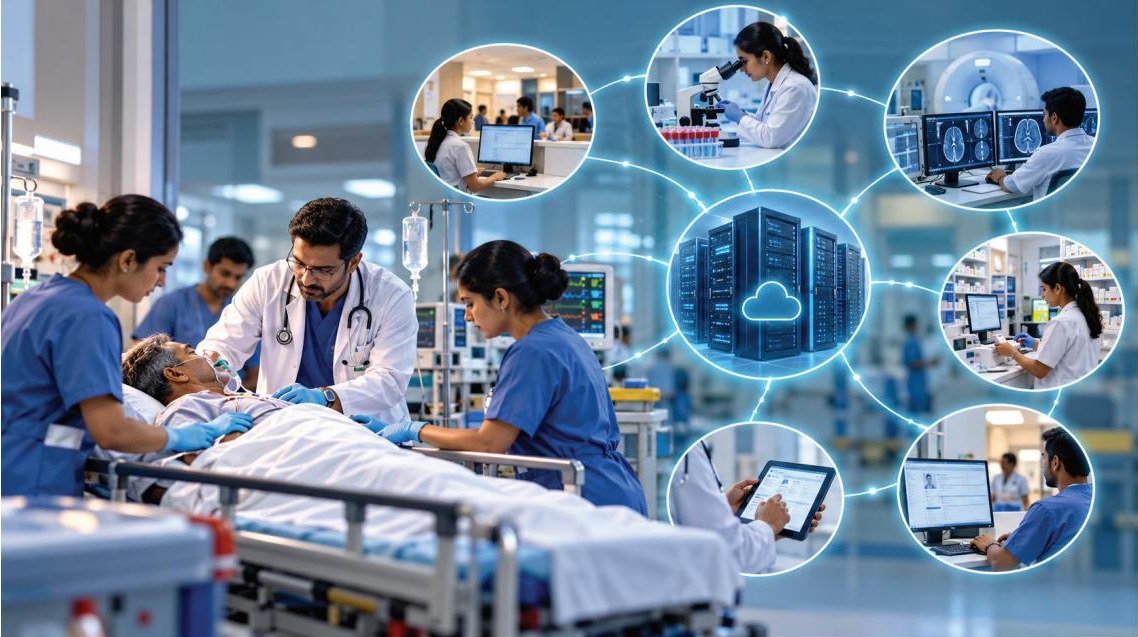
A hospital visit may appear to follow a predictable path: registration, consultation, investigations, medication, and discharge. Behind each step, however, multiple people, applications, and processes work together.
A unique number helps connect the patient’s current visit with previous medical records. Electronic medical records bring together available information such as allergies, medications, clinical notes, and earlier investigations, helping doctors make informed decisions.
When the hospital information system communicates effectively with laboratory, radiology, and pharmacy applications, information can move between departments without repeated manual entry.
Consider a doctor waiting for a radiology report. In an integrated hospital, the report and relevant images may be accessible through the clinical system. Without this integration, staff may need to locate the report, make calls, or physically carry documents between departments.
Multiply this across a busy hospital, and the impact becomes clear. Repeated manual work consumes valuable staff time, creates opportunities for errors, and can delay decisions.
Digital integration is more than convenience. It helps connect the different stages of a patient’s care.
When technology connects people
When a doctor orders a blood test, the request can flow electronically to the laboratory. The sample is identified, the investigation is performed, and the verified result becomes available to the treating team. Similarly, an electronic prescription can reach the pharmacy, supporting medication review, dispensing, and inventory updates.
These processes involve much more than software. They depend on accurate patient identification, reliable interfaces, well-defined workflows, and trained professionals.
Technology helps information move, but people remain responsible for interpreting results, verifying prescriptions, and making clinical decisions.
When systems fail to communicate, staff become the link. They print reports, enter information again, make calls, and follow up with other departments. Their efforts keep the hospital moving, but manual coordination can introduce delays and additional risks.
Well-integrated systems reduce these gaps, letting healthcare professionals spend less time chasing information and more time using it to support patient care.
The infrastructure nobody sees
Behind every digital transaction lies an extensive technology environment. Networks connect departments, servers process requests, databases store records, and interfaces allow different applications to exchange information. Monitoring tools help IT teams identify performance issues, while backup and recovery arrangements support continuity.
When everything works, patients rarely think about this infrastructure. But a slow database can affect multiple departments, a network failure can interrupt access to records, and a failed interface can prevent important information from reaching the right team.
Resolving such issues requires more than restarting a system. IT teams must understand the operational impact, identify the underlying cause, and coordinate with clinical and administrative departments to restore services safely.
Protecting patient information is equally important. Appropriate access controls, security monitoring, staff awareness, and dependable recovery arrangements help safeguard sensitive medical records.
Hospital IT, therefore, is not simply about maintaining computers. It is about keeping critical processes connected, reliable, and secure.
Behind every screen is a process. Behind every process are people.
Technology matters. People matter more
Introducing a digital system does not automatically improve healthcare. Staff need appropriate training, workflows must be understood, and systems must be designed around the realities of hospital operations. Clinical teams, administrators, and IT professionals must work together to ensure that technology delivers its intended benefits.
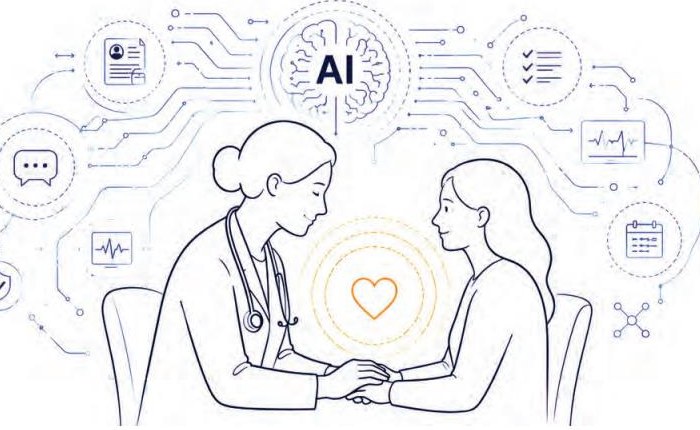
Even the most sophisticated system cannot replace a doctor’s judgment, a nurse’s vigilance, or the reassurance offered to a worried patient. Technology can improve access to information and coordination, but empathy and professional responsibility remain at the heart of care.
The true measure of a digitally connected hospital is not the number of applications it uses or the sophistication of its infrastructure. It is how effectively information reaches the right people, how reliably processes work, and how well technology supports care delivery.
By the time a patient leaves the hospital, several departments and digital systems may have worked together behind the scenes. The patient may remember the doctor’s explanation or a nurse’s kindness, without ever knowing how much technology supported that journey.
And that is exactly how it should be.
Behind every screen is a process.
Behind every process are people.
The best hospital technology brings them together, helping healthcare work better when every minute matters.