
Key takeaways
- A reliable result starts before testing: the right patient, the right tube, enough sample and careful transport.
- Analyzers are calibrated and checked with quality-control materials before patient results are released.
- Critical values are communicated promptly to the treating team, not just released electronically.
- Discuss your report with your doctor rather than reading individual numbers in isolation.
A laboratory report may look like a sheet of numbers, but behind every number lies a carefully controlled process.
When we undergo a blood test, urine test, biopsy, culture, or any other laboratory investigation, we usually see only the final report. A sample is collected, sent to the laboratory, and, sometime later, the result appears on our phone or reaches our doctor.
But what happens in between?
Modern laboratory medicine has one fundamental goal: to provide the right result, for the right patient, at the right time. Laboratory results can help detect diseases early, confirm a diagnosis, monitor treatment, guide the choice of medicines, and reassure patients when findings are normal. Accuracy, therefore, is not merely a technical requirement. It is an important component of patient safety.
The journey begins with the sample
The work to ensure quality of a laboratory result begins long before a sample reaches an analyzer. Even the most advanced instrument cannot compensate for a poor-quality specimen.
Reliable testing begins with identifying the correct patient, collecting the appropriate specimen, using the right tube or container, and obtaining an adequate sample quantity. The sample must then be labelled, transported, stored, and processed under suitable conditions.
Several seemingly minor factors can influence specimen quality. Prolonged tourniquet use, vigorous shaking of blood tubes, delays in transport, incorrect storage temperature, insufficient sample volume, and collection into the wrong tube can all influence results.
Damage to blood cells during collection or transport can cause haemolysis, and may interfere with several laboratory measurements. Similarly, contamination or improper collection of microbiology specimens can make results difficult to interpret.
Specimen collection is therefore not merely a routine activity. It is the first quality checkpoint in laboratory medicine.
When a sample is unsuitable and could produce a misleading result, requesting a fresh specimen may be the safest option. Although recollection can be inconvenient, an inaccurate result may have far greater consequences for patient care.
Good sample quality is the foundation of good laboratory results.
Road to a reliable report
Once a suitable sample reaches the laboratory, several layers of quality assurance come into play.
Modern analyzers can process large numbers of tests efficiently, but accuracy depends on more than just technology. Instruments require regular calibration, maintenance, and performance verification. Laboratories also analyze quality-control materials to check that testing systems are functioning within acceptable limits before patient results are released. Many laboratories participate in external quality-assessment programs, in which performance is evaluated against independent standards.
The quality process does not end when an analyzer generates a number. A reliable laboratory report must be accurate, clear, timely, and clinically meaningful.
Unexpected or significantly abnormal findings may require verification, repeat testing, or comparison with previous results. Some findings are classified as critical values because they may indicate an immediate risk to the patient. These require prompt communication to the treating clinical team, rather than simply being released electronically.
Appropriate units, reference intervals, and interpretative comments, where relevant, also contribute to the quality of a report.
Laboratory quality thus extends across the entire process — from receiving the specimen to delivering information that helps clinicians make decisions.
Behind every sample is a person. Behind every report is a responsibility.
Different tests, different clues
Laboratory medicine encompasses several specialized disciplines. Each examines a different aspect of health and disease, but all contribute to diagnosis, appropriate treatment, and better patient outcomes.
Where the journey begins
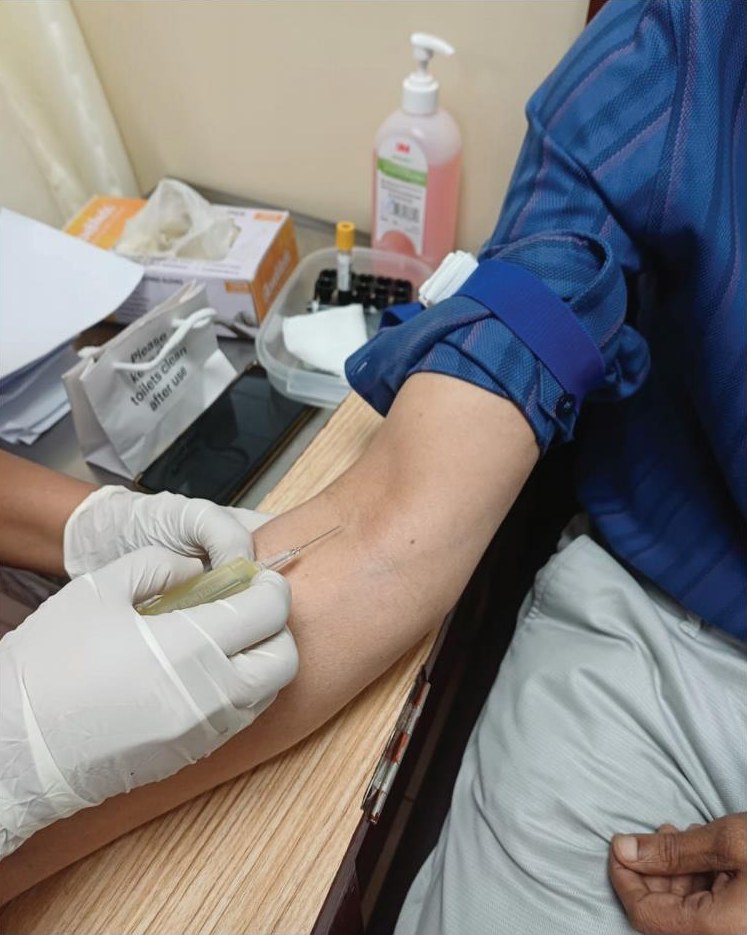
For many patients, the phlebotomist is their first contact with laboratory medicine.
Blood collection may appear straightforward, but good phlebotomy requires knowledge, training, and precision. Correct patient identification, selecting the appropriate tube, collecting an adequate volume, proper mixing, correct labeling, and timely transport can all affect the final result.
Careful collection and handling help reduce problems such as hemolysis, clotting, contamination, and unnecessary recollection.
Phlebotomy is therefore much more than drawing blood. The quality of a laboratory report often begins at the collection chair or bedside.
Understanding the body’s chemistry
Clinical chemistry measures chemical substances in blood and other body fluids, providing important information about organ function and metabolic processes.
This discipline includes tests for glucose, cholesterol, kidney function, liver function, electrolytes, enzymes, proteins, cardiac markers, and hormones.
These investigations help screen for disease, establish diagnoses, assess severity of disease, and monitor treatment.
For a person with diabetes, for example, laboratory testing helps assess glucose control. Kidney and liver function tests provide information about organ health, while electrolyte measurements can identify abnormalities that may require urgent correction. Cardiac biomarkers can help evaluate patients with suspected heart injury.
Clinical chemistry therefore plays an important role throughout a patient’s journey, from disease detection to treatment monitoring, and follow-up.
Clues from blood, urine, and body fluids
Clinical pathology provides valuable diagnostic information through the examination and analysis of blood, urine, and other body fluids.
A complete blood count measures hemoglobin, and provides information about red blood cells, white blood cells, and platelets. These findings can offer important clues to anemia, infection, inflammation, and several blood disorders.
A urine examination can help identify evidence of kidney disease, urinary tract infection, diabetes, and other systemic conditions. Analysis of other body fluids can similarly provide insights into a range of diseases.
Many of these investigations are commonly called ‘routine tests,’ but routine does not mean insignificant. An apparently simple test may sometimes provide the earliest clue to an important underlying disease.
Identifying infection, guiding treatment
Clinical microbiology plays a central role in diagnosing and managing infectious diseases.
Microscopy, culture, and antimicrobial susceptibility testing remain foundational to the discipline. However, the laboratory’s role extends beyond merely identifying an organism.
Interpreting results requires consideration of specimen quality, possible contamination, and the organism’s susceptibility to antimicrobial agents.
This is particularly important in an era of increasing antimicrobial resistance.
Rapid diagnostic methods and molecular techniques can complement conventional microbiology by detecting infectious agents more quickly in appropriate clinical settings.
The microbiology laboratory also supports antimicrobial stewardship and infection prevention by helping clinicians choose appropriate treatment and avoid unnecessary antibiotic use.
Its contribution therefore extends beyond individual patient care to the broader effort to control antimicrobial resistance and prevent the spread of infections within healthcare settings.
When tissues provide the answer
Histopathology involves examining tissues under a microscope to identify and characterize disease.
A biopsy or surgical specimen undergoes several carefully controlled processing steps before a pathologist prepares thin sections of tissue for examination. The pattern and appearance of cells and tissues provide vital diagnostic information.
Histopathology is especially important in diagnosing and classifying cancers, but it also plays a significant role in evaluating inflammatory, infectious, and other non-malignant conditions.
In cancer care, the histopathology report can influence major treatment decisions, including surgery, chemotherapy, radiotherapy, and other approaches.
Modern pathology increasingly combines microscopic assessment with immunohistochemistry and specialized molecular investigations, enabling more precise diagnosis and personalized treatment.
A tissue specimen may be small, but the information it provides can shape an entire course of treatment.
The people behind the lab report
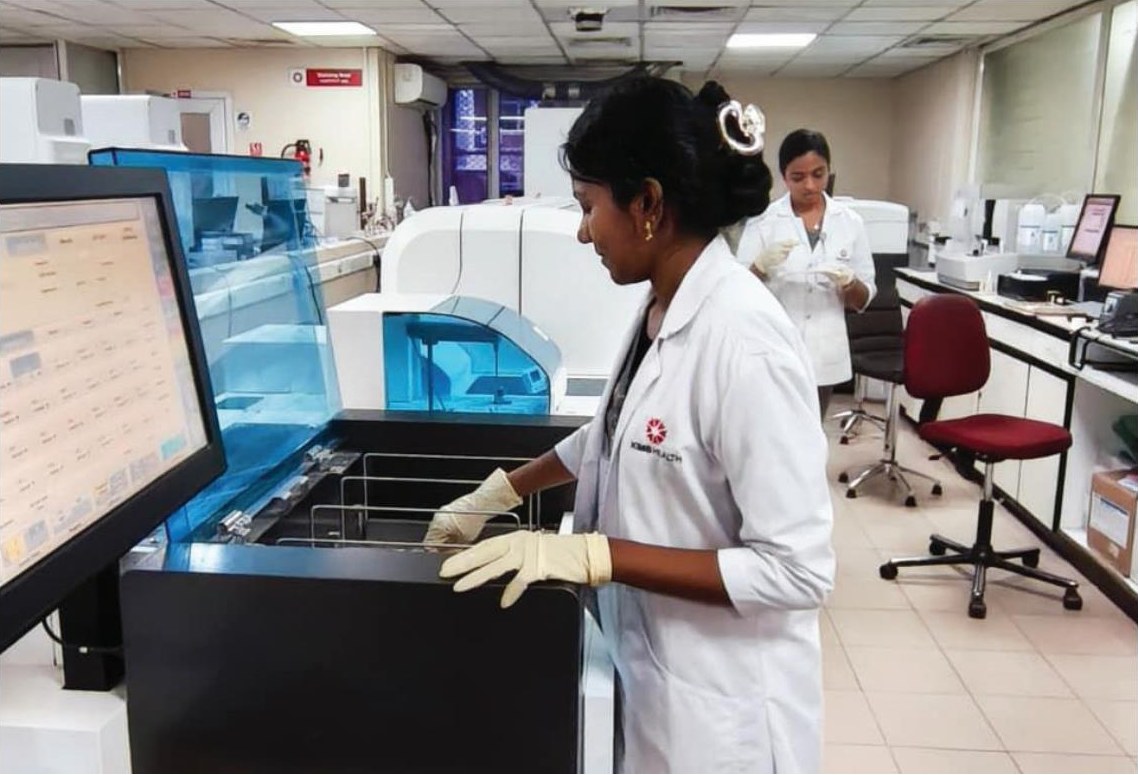
Increasing automation can sometimes create the impression that modern laboratories are run predominantly by machines. In reality, qualified laboratory professionals remain central to every stage of the process.
Medical laboratory technologists and other trained personnel handle specimens, operate sophisticated instruments, monitor quality-control systems, identify technical problems, and ensure that established procedures are followed correctly.
They work alongside doctors specializing in laboratory medicine, including pathologists, microbiologists, biochemists, and other laboratory physicians.
Laboratory specialists help select and validate testing methods, introduce new technologies, review unusual findings, correlate laboratory results with clinical information, and advise treating clinicians on the appropriate choice and interpretation of investigations.
Their responsibilities also extend to quality management, patient safety, antimicrobial stewardship, clinical consultation, and the continuous improvement of laboratory services.
Technology provides extraordinary analytical capabilities, but the expertise of qualified professionals helps ensure that results are reliable, interpreted appropriately, and translated into meaningful clinical decisions.
Understanding your lab report
A laboratory result is an important piece of the diagnostic picture, but it does not always provide the complete answer on its own.
Patients should discuss their reports with their treating doctor rather than drawing conclusions from individual numbers or attempting to interpret results in isolation.
Every sample matters
A patient may visit the laboratory for something as simple as a routine blood glucose test or as complex as a biopsy, molecular investigation, or specialized microbiological test.
The specimen may differ. The technology may vary. The specialist involved may change. But the responsibility remains the same: to ensure that the specimen is appropriate, the testing is reliable, the report is accurate, and the information generated contributes meaningfully to patient care.
A laboratory report is therefore much more than a collection of numbers.
Behind every sample is a person.
Behind every report is a responsibility.
And behind every accurate result is a team committed to getting it right.
Have a question about this?
Send it to a KIMSHEALTH Laboratory medicine specialist. We'll reply by email or phone.