Key takeaways
- A generic has the same active molecule, dose, strength and quality standards as the brand; only the name and price differ.
- The ‘nocebo effect’ can make a cheaper medicine seem to work less well, even when it is chemically identical.
- In 2001, Cipla’s generic HIV therapy cut the cost from more than US$12,000 a year to about US$350.
- An affordable medicine taken every day does more good than a costly one abandoned after a fortnight.
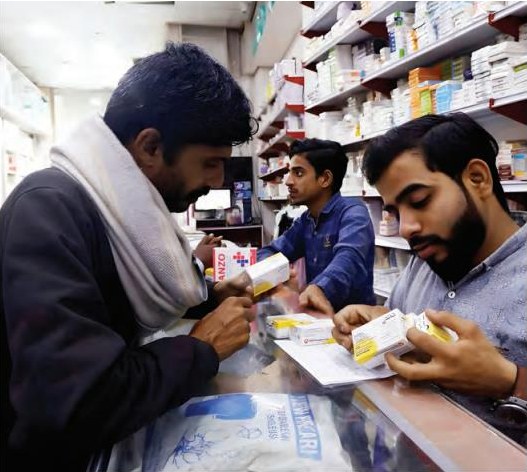
She stood at the counter of the Emergency Department pharmacy holding a small strip of tablets, doubt writ large on her face. Her husband’s prescription had just been dispensed, but the pharmacist had handed over a generic version of the medicine I had prescribed. She turned the strip over once, then twice, and then came to me with the question I have heard in a hundred quiet variations.
“If it’s so much cheaper, can it really be as good?”
‘The cheap one.’ That is almost always the phrase people use. Not the weaker one. Not the different one. But the cheap one. And in that very term lies the misunderstanding I want to write about.
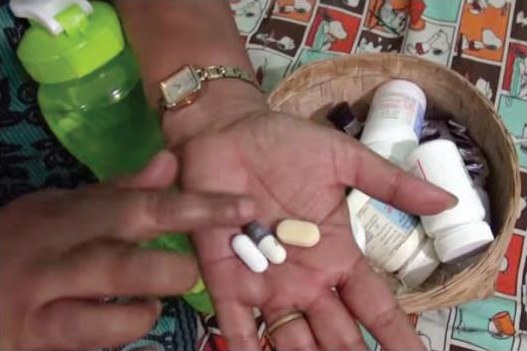
The tablet that was dispensed by the pharmacist and the branded one I had prescribed are the same medicine: the same active molecule, the same dose, the same strength, manufactured to meet the same quality standards. The differences are in the name printed on the strip and the price printed on the bill.
But to the person holding it, they are not the same thing at all. One feels like medicine. The other feels like a compromise. We like to think we judge our medicines by how well they work. In truth, we often judge them by what they cost.
There is a strange, but well-studied phenomenon in medicine called the ‘nocebo effect,’ the mirror image of the ‘placebo effect.’ When people are told that a drug is a cheaper substitute, they are most likely to report that it works less well and causes more side effects, even when the two products are chemically identical.
Expectations have a remarkable influence on experience. A lifetime of “you get what you pay for” does not politely switch itself off at the pharmacy counter. We are conditioned to believe that expensive means potent, and inexpensive means inferior. As a result, a perfectly good medicine can be quietly undermined by nothing more than its price tag. I understand the instinct. It is deeply human. But I wish more people knew the story that could change how the word ‘generic’ feels.
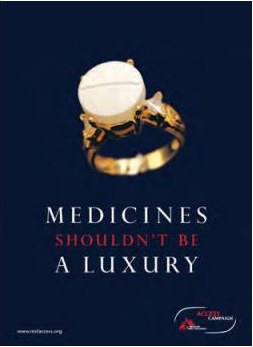
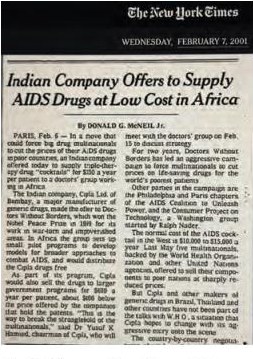
Turn the clock back to 2001. Antiretroviral therapy, the treatment that turned HIV from a death sentence into a manageable illness, cost more than US$12,000 a year. For the millions of people living with HIV across Africa and Asia, that was not just a price. It was a wall. The medicines existed, but the people who needed them could not afford them. And so, millions died despite the existence of a life-saving treatment.
Then, a man named Dr Yusuf Hamied, who ran a generic drug company in Mumbai called Cipla, changed the narrative. He offered the same triple-drug therapy for less than a dollar a day, about US$350 a year. Overnight, the economics of survival changed. Governments and aid organizations that could never have dreamed of treating their people suddenly could. Lives that were being counted as lost were counted again as lives that they could save.
That is what a generic medicine did. Not a lesser medicine — the same medicine, freed from a price that had little to do with the chemistry inside it. It is one of the reasons India came to be known as ‘the pharmacy of the world,’ supplying affordable, quality medicines to countries across the globe. The tablet my patient was holding and calling “the cheap one” belongs to that very lineage. There is nothing small about it.
And there is another reason I care so deeply about this — one much closer to home. In the Emergency Department, I meet the consequences of unaffordable medicines almost every week.
I meet the man whose blood pressure tablets ran out because the branded version cost more than a day’s wages. He arrives with an intracerebral hemorrhage that might have been prevented. I meet the woman with diabetes who has quietly been cutting her tablets in half to make the box last until the end of the month.
Cost is one of the commonest reasons people stop taking the medicines that keep them well, yet they rarely say so. They run out. They ration. They stop. The Emergency Department is often where the “quietly stopped” finally congregate, wearing the face of a stroke, a heart attack, or a diabetic crisis that might never have happened.
Here is the truth: a medicine that a family can afford and continue to take week after week will always do more good than a costlier one they abandon after a fortnight. The best medicine is not the most expensive one on the shelf. It is the one that is actually taken, every day, without a household having to choose between health and food, school fees, or rent.
The best medicine is not the most expensive one on the shelf. It is the one that is actually taken, every day.
Over time, I have slowly come to understand that when I write a prescription, I am not merely choosing a molecule. I am also making a quiet decision about whether a patient’s family can continue treatment this month, and whether they will be able to buy the next box of the prescribed medicine at all.
And when I reassure a hesitant patient that the generic medicine is the same medicine, that it is the same molecule with the same strength and the same quality standards, and that only the name is ‘cheaper,’ not the medicine, I am trying to undo a little of that nocebo effect. I am trying to return trust to where it belongs: in the medicine itself, and not in its price.
This is also the direction in which healthcare in India is steadily moving. The National Medical Commission has encouraged doctors to prescribe medicines by their generic names so that patients can access the most affordable equivalent. In December 2025, following observations by a High Court that clear and legible prescriptions are integral to the constitutional right to health, the NMC instructed medical colleges to actively monitor prescribing practices, including prescription legibility and the use of generic names, through dedicated committees.
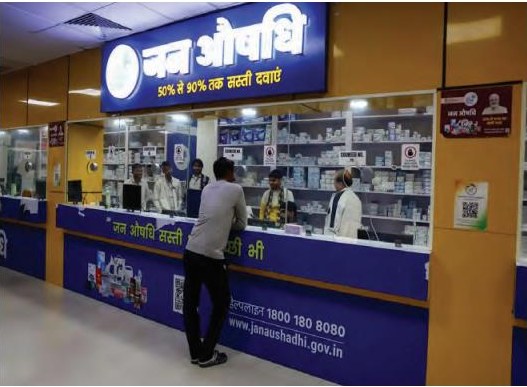
The same philosophy is reflected in the rapid expansion of Jan Aushadhi Kendras, government-supported pharmacies that provide quality-assured generic medicines at substantially lower prices. From just 80 outlets in 2014, the network had grown to more than 17,900 by the end of 2025, with further expansion planned. Medicines are typically priced 50 to 80 percent below comparable branded products, the stores stock more than 2,000 medicines and hundreds of surgical consumables, and they now serve an estimated 1.5 million people every day. Together, they are estimated to have helped Indian families save more than ₹40,000 crore.
There is nothing cheap about that.
It may, in fact, be one of the most quietly humane ideas medicine has ever embraced: that once an effective treatment exists, it should belong to everyone and should not remain the privilege of those who can afford a brand name.
The next time you are offered a generic medicine at the pharmacy counter, you need not see it as a compromise or accept it on faith. You can choose it as an informed decision, knowing that your health does not have to come at a premium. Increasingly, in India, it no longer does. Kerala is among the top three states in the country in the number of Jan Aushadhi Kendras, with well over 1,500 Kendras — a reflection of how readily the state has embraced affordable, quality-assured medicines. For people living with chronic conditions such as diabetes, hypertension, or heart disease, where medicines become a lifelong monthly expense, this is far more than a convenience. It can be the difference between staying on treatment and quietly abandoning it.
The message for patients is simple: A generic medicine purchased from a licensed pharmacy, manufactured by a CDSCO-approved company, and stored properly, is held to the same quality bar as its branded counterpart. The real risk lies not in generic medicines as a category, but in counterfeit or unverified products sold through dubious channels. Generic medicines are not an inferior substitute; they are the same medicine sold without the premium attached to a brand name. What has changed in recent years is the ecosystem around them: stricter manufacturing standards, stronger regulatory oversight, prescribing reforms, and an expanding network of affordable pharmacies that now reaches almost every corner of the country. Together, these have given patients something almost as valuable as affordability: confidence.
The confidence to choose the cheaper option without trading away quality.
So I told her exactly that.
“It is the same molecule,” I said. “It will do the same work in your husband’s body, whatever the strip is called.”
She looked at it once more. Then she slipped it into her bag and took it home.
The molecule, after all, does not know what we paid for it.
Perhaps we shouldn’t either.
How to buy and use generic medicines safely
A few simple precautions can help patients use generic medicines with confidence:
- Ask about the generic option. When you receive a prescription, it is entirely appropriate to ask your doctor or pharmacist whether a suitable generic equivalent is available.
- Buy from licensed sources. Purchase medicines only from registered pharmacies or verified outlets, including Jan Aushadhi Kendras. Avoid unverified online sellers and unusually cheap loose medicines.
- Check the basics. Ensure the medicine carries the manufacturer’s name, batch number, manufacturing and expiry dates, and is supplied in intact packaging.
- Store medicines correctly. Heat and humidity — not the brand name — are most often why medicines lose their potency at home.