Key takeaways
- Filtered and edited photos create a ‘social media face’ that few real faces match.
- Surgery involves recovery time and risks that short videos rarely show.
- Good aesthetic surgery enhances your own features rather than copying someone else’s.
- Before any procedure, ask whether your reference image is edited, and consult a qualified plastic surgeon.
Social media has transformed the way we communicate, learn, and even perceive beauty. Every day, platforms such as Instagram, TikTok, Snapchat, and Facebook expose us to countless images of seemingly flawless faces and perfectly sculpted bodies. While these platforms have made information about cosmetic procedures more accessible and helped reduce the stigma surrounding aesthetic treatments, they have also promoted beauty standards that are often unrealistic and difficult — if not impossible — to achieve.
As a plastic surgeon, I have noticed a significant change in the expectations of patients seeking cosmetic procedures. Increasingly, people arrive for consultations carrying photographs of celebrities, influencers, or even filtered versions of their own selfies. Many hope to replicate these appearances without realizing that the images have been enhanced using filters, photo-editing applications, professional lighting, makeup, or even artificial intelligence. What appears effortless on a phone screen is frequently far removed from reality.
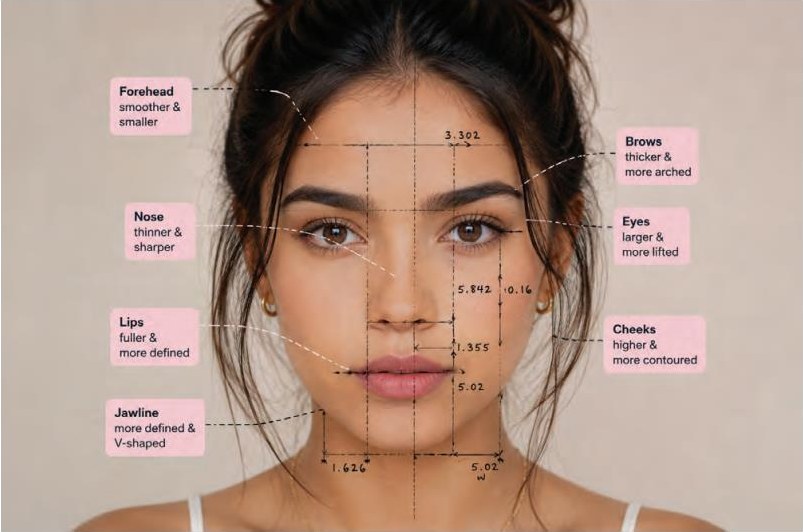
This trend has given rise to what many experts refer to as the “social media face.” It is characterized by smooth, poreless skin, high cheekbones, a sharply defined jawline, full lips, a small nose, large eyes, and an overall youthful appearance. While each of these features may occur naturally in some individuals, it is rare to see all of them perfectly combined in one face. Digital filters erase natural skin texture, wrinkles, scars, pigmentation, and even the subtle facial asymmetry that gives every face its uniqueness.
Constant exposure to such edited images can distort the way we perceive ourselves. Many people begin comparing their everyday appearance with someone’s carefully curated online image, forgetting that the comparison is neither fair nor realistic. Over time, this can lead to dissatisfaction with entirely normal facial features and create unnecessary pressure to pursue cosmetic treatments that may not be necessary.

Social media has also changed how cosmetic surgery is perceived: short videos and dramatic before-and-after photographs often present surgery as a quick, simple, and risk-free solution. Recovery is rarely shown in full, and potential complications are seldom discussed. As a result, many people underestimate the complexity of plastic surgery and overestimate what it can realistically achieve.
In reality, plastic surgery is a medical specialty that combines science, artistry, and sound clinical judgment. Every patient’s anatomy is different. Factors such as skin quality, facial structure, age, healing capacity, and overall health all influence the outcome. While modern techniques can produce remarkable improvements, no operation can create perfection or transform one person into an exact copy of someone else.
One of the most important parts of my work is helping patients develop realistic expectations. A consultation is not simply about deciding which procedure to perform; it is about understanding why the patient wants surgery, discussing what is achievable, and explaining the limitations as honestly as the benefits. Sometimes the best advice a surgeon can give is that a requested procedure is unnecessary or unlikely to deliver the desired result.
The goal of aesthetic surgery should never be to erase individuality. Instead, it should enhance a person’s natural features while preserving facial harmony and balance. The most successful cosmetic procedures are often the most subtle — those that make friends and family notice that someone looks refreshed, healthier, or more confident, without the result ever appearing artificial or overdone.
Patients also have an important role to play in making informed decisions. Before considering any cosmetic procedure, it is worth asking a few simple questions. Is the image I am comparing myself with edited? Am I trying to resemble someone else rather than improve my own appearance? Do I understand the recovery period, potential risks, and the realistic outcome? Most importantly, have I consulted a qualified plastic surgeon who will provide honest advice rather than unrealistic promises?
Fortunately, social media can also become part of the solution. Many board-certified plastic surgeons now use these platforms to educate the public about cosmetic procedures, recovery, complications, and realistic outcomes. By sharing authentic patient journeys — including swelling, healing, scar maturation, and long-term results — they help replace myths with facts. Honest education empowers patients to make safe and informed decisions rather than impulsive ones based on online trends.
Beauty has never been one-size-fits-all. Every face tells a unique story through its features, expressions, and natural characteristics. Cosmetic surgery should respect and enhance that individuality, not replace it with an ideal created by filters and algorithms. Trends come and go, but natural balance and facial harmony never go out of style.
For anyone considering cosmetic treatment, it is important to remember that plastic surgery is about far more than changing appearance. It is about making informed choices, having realistic expectations, and choosing what feels right for you. The best results are not about looking like someone else, but about feeling confident, comfortable, and true to yourself.
The best results are not about looking like someone else, but about feeling confident, comfortable, and true to yourself.
In a world where digital perfection is only a swipe away, perhaps the greatest beauty lies in authenticity. Cosmetic surgery should be a journey of self-enhancement, not an attempt to imitate an illusion. When guided by realistic expectations, expert advice, and a focus on natural results, aesthetic surgery can enhance confidence while preserving the individuality that makes every face unique.
Have a question about this?
Send it to a KIMSHEALTH Plastic surgery specialist. We'll reply by email or phone.