Scientists edit human embryo genes with precision; reignites debate

Scientists at Columbia University have reported a major advance, editing the DNA of early human embryos with unprecedented accuracy. The research raises the possibility that, in the future, scientists could use it to prevent some inherited genetic disorders before a baby is born or allow parents to select desired traits in their babies.
These prospects have long raised much excitement and bitter controversy in the scientific community and elsewhere.
The Columbia researchers reported using a next-generation technique known as ‘base editing’ to make highly precise changes to DNA in laboratory-grown human embryos. The scientists were able “to meticulously replace individual genetic letters in sequences of DNA without causing the damage often observed with an earlier form of gene editing, CRISPR.”
Unlike conventional CRISPR technology, which cuts both strands of DNA, base editing modifies individual DNA letters without creating double-stranded breaks, potentially reducing unintended genetic damage.
The researchers successfully corrected disease-associated genetic variants linked to inherited disorders. However, the technology is still in its early stages. A significant limitation is “mosaicism,” in which only a proportion of an embryo’s cells are successfully edited, raising concerns about reliability and safety.
The embryos were used only for research and were not implanted to establish a pregnancy. Scientists said that much more research is needed to improve safety and accuracy before the technique could be considered for treating patients.
[Sources: CRISPR Medicine News, NYT, Nature, The Irish Times.]
Blood test may predict Alzheimer’s risk years before symptoms appear

A simple blood test could help identify healthy older adults who are at high risk of developing Alzheimer’s disease years before memory problems begin, according to new research presented at the Alzheimer’s Association International Conference and published in JAMA.
The test measures a protein called p-tau217, a biomarker linked to the brain changes seen in Alzheimer’s disease.
In a study involving nearly 2,700 cognitively healthy older adults, researchers found that people with the highest levels of p-tau217 had a 38% chance of developing cognitive impairment within five years and a 78% chance within 10 years. The findings suggest that blood tests could become an important tool for identifying individuals at greatest risk and enrolling them in clinical trials of treatments designed to delay or prevent the disease.
However, the test cannot diagnose Alzheimer’s disease on its own, and further research is needed to confirm its long-term accuracy and determine how best to use the results in clinical practice. Experts caution that until more effective preventive therapies become available, the test is expected to remain primarily a research tool.
[AP News; NIH; WSJ.]
FDA approves first oral PCSK9 inhibitor for lowering cholesterol

The US Food and Drug Administration (FDA) has approved Lipfendra (enlicitide), the world’s first-of-its-kind, once-daily oral pill (a PCSK9 inhibitor), marking a major advance in the treatment of high LDL (“bad”) cholesterol.
Until now, PCSK9 inhibitors — among the most effective cholesterol-lowering drugs — have only been available as injections. The new pill, manufactured by Merck, offers a convenient alternative for adults whose cholesterol remains elevated despite diet, exercise, and statin therapy, including those with inherited forms of high cholesterol.
PCSK9 is a liver protein that reduces the body’s ability to remove LDL cholesterol from the bloodstream. By blocking this protein, Lipfendra helps the liver clear more LDL cholesterol.
In Phase 3 clinical trials, the drug reduced LDL cholesterol by 56–59% when added to standard treatment, with the effect maintained for up to one year. Side effects, including dizziness and diarrhea, were generally mild and similar to those seen with placebo, although the tablet needs to be taken on an empty stomach.
Experts believe a PCSK9 inhibitor pill could improve treatment adherence by eliminating the need for injections, making this highly effective class of medicines more acceptable to many patients. However, Lipfendra is intended to complement — not replace — statins and healthy lifestyle measures.
[Sources: Reuters, AP, NYT.]
NIH launches world’s largest integrated health database
The US National Institutes of Health (NIH) has announced that its All of Us Research Program is now the world’s largest integrated genomics and health database, a landmark achievement expected to accelerate the development of precision medicine. The resource combines genetic information with electronic health records, laboratory results, lifestyle data, and wearable device information from more than 747,000 participants, creating an unprecedented platform for studying how genes, environment, and lifestyle interact to influence health and disease.
One of the program’s greatest strengths is its diversity. Participants represent a wide range of ethnic, geographic, and socioeconomic backgrounds, enabling researchers to understand better diseases that affect different populations and helping ensure that future medical advances benefit a broader cross-section of society. Scientists can use the database to identify disease risk factors, discover new drug targets, and develop more personalized approaches to disease prevention and treatment.
The initiative marks a significant step towards precision medicine. In this, prevention, diagnosis, and treatment are tailored to an individual’s genetic makeup and health profile rather than relying on a one-size-fits-all approach. For countries such as India, where genetic diversity is enormous, the program also highlights the value of building large, representative health databases to support future biomedical research and improve patient care.
[Sources: U.S. National Institute of Health; NEJM; TNW.]
A life-changing drug transforms cystic fibrosis care
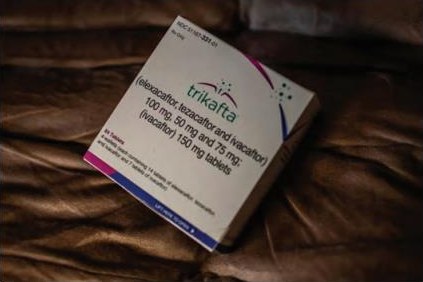
A medicine often described as “miraculous” is transforming the outlook for people with cystic fibrosis (CF), a rare inherited disease that damages the lungs and digestive system. The drug, Trikafta (called Kaftrio in some countries), treats the underlying genetic defect that causes the disease rather than simply relieving its symptoms.
For many patients, the impact has been dramatic. Children who once faced repeated hospital admissions are now able to attend school regularly, adults are returning to work, and many patients who expected a shortened lifespan are planning careers, families, and futures they never thought possible. The treatment has also reduced the need for lung transplants in many cases, a recent report in the New York Times said.
Despite its success, access remains a major challenge because of the drug’s huge cost. With a list price of over $322,000 annually in the United States, it is expected to cost millions of dollars over the course of a patient’s lifetime, according to a NYT report. Efforts are underway in several countries to improve affordability through generic versions and expanded access programs. For India, where cystic fibrosis is often underdiagnosed and access to advanced therapies is limited, the story highlights both the promise of precision medicine and the need to make such life-changing treatments more widely available.
[Sources: NYT; Medicines Law and Policy.]
Obituary
Joseph Fraumeni, pioneer of cancer genetics
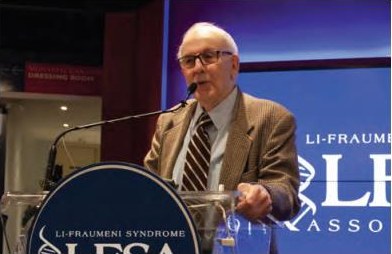
Dr Joseph F. Fraumeni Jr., the American physician-scientist whose pioneering research transformed our understanding of inherited cancer risk, died on June 22 at McLean, Va, (US) at the age of 93. Together with colleague Dr Frederick P. Li, he first described the rare inherited disorder, now known as Li-Fraumeni syndrome. This landmark discovery helped establish the field of cancer genetics.
In 1969, Li and Fraumeni identified families in which multiple members developed cancers such as sarcomas, breast cancer, brain tumors, leukemia, and adrenal cancers at unusually young ages. Their work eventually led to the discovery that inherited mutations in the TP53 tumor suppressor gene are responsible for most cases of the syndrome. This finding revolutionized the understanding of hereditary cancer syndromes and paved the way for genetic counselling, risk assessment, and intensive surveillance of high-risk individuals.
Beyond this discovery, Fraumeni’s research at the US National Cancer Institute advanced the fields of cancer epidemiology and prevention, highlighting the roles of both genetic and environmental factors in cancer development. His work continues to influence modern precision oncology and hereditary cancer screening programs worldwide, benefiting patients and families across generations.
[Sources: U.S. National Cancer Institute; National Library of Medicine; American Association for Cancer Research; NYT.]