Key takeaways
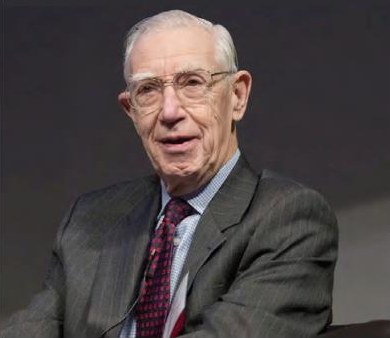
- Dr. Lucian Leape, who died in June 2025 aged 94, is regarded as the father of the modern patient-safety movement.
- His research showed most errors come from poorly designed systems, not incompetent people.
- His 1994 paper ‘Error in Medicine’ urged healthcare to learn from aviation and other high-risk industries.
- Surgical checklists, incident reporting and psychological safety all owe much to his ideas.
Every day, thousands of healthcare professionals make countless decisions that save lives. Yet, despite the skill and dedication of doctors, medicine remains an inherently complex enterprise where mistakes can happen. Today, hospitals around the world recognize that the safest healthcare systems are those that learn from errors rather than conceal them. Much of that change can be traced to the work of one remarkable physician: Dr. Lucian Leape.
When Dr. Leape died in June 2025 at the age of 94, he was widely recognized as the father of the modern patient safety movement. His work transformed the way hospitals think about medical errors, replacing a culture of blame with one focused on learning, improvement, and safer systems.
A difficult question
Lucian Leape began his career in a very different world. Trained at Harvard Medical School, he spent more than 25 years as a respected pediatric surgeon, caring for children and helping establish pediatric surgery as a specialty.
Like every experienced surgeon, he had witnessed unexpected complications and medical errors. But instead of asking who was responsible, he became interested in a different question: Why do capable, dedicated healthcare professionals sometimes make preventable mistakes?
Rather than accepting these events as unavoidable — or blaming individual doctors or nurses — Leape believed medicine needed to understand why errors occurred in the first place. The answer, he believed, lay not in individual failings but in the systems within which people worked.
At the time, this was a radical idea.
Looking beyond individual mistakes
In the late 1980s, Leape joined the landmark Harvard Medical Practice Study, which reviewed more than 30,000 hospital records in New York State. The findings were sobering. Many patients experienced preventable injuries during hospital care, and most were not the result of incompetence or negligence.
Instead, the research showed that errors often arose because healthcare systems were poorly designed. Busy clinicians worked within processes that depended too heavily on memory, communication that could easily fail, and workflows with too few safeguards.
This insight challenged one of medicine’s longest-held assumptions — that errors primarily reflected personal failure.
Leape argued that because all humans make mistakes, the safest healthcare systems are those that anticipate human fallibility and build protections against it.
Changing the conversation
In 1994, Leape published a groundbreaking paper, Error in Medicine, arguing that healthcare should adopt many of the safety principles already used in aviation, nuclear power, and other high-risk industries.
These industries accepted a simple truth: humans are fallible.
Rather than expecting perfect performance every time, they designed systems that made errors less likely and prevented small mistakes from becoming disasters.
Leape believed healthcare needed to do the same.
His ideas were controversial. At the time, discussing medical errors openly was considered uncomfortable, even unprofessional. Many believed that acknowledging mistakes would undermine public trust or expose clinicians to punishment.
Leape believed the opposite.
“If healthcare professionals fear blame,” he argued, “they are less likely to report errors. And if errors remain hidden, organizations lose the opportunity to learn.”
His message was not that individuals were unimportant. Professional competence, accountability and ethical practice remained essential. But even the most skilled clinicians work within systems, and safer systems help competent people deliver safer care.
If healthcare professionals fear blame, they are less likely to report errors. And if errors remain hidden, organizations lose the opportunity to learn.
The report that changed healthcare
Leape’s work culminated in the landmark 1999 Institute of Medicine report, To Err Is Human: Building a Safer Health System, which estimated that tens of thousands of Americans died each year because of preventable medical errors.
The report captured worldwide attention and became a turning point in healthcare.
Hospitals began creating dedicated patient safety programs, introducing structured incident reporting systems, adopting surgical safety checklists, standardizing high-risk procedures, limiting resident work hours, and appointing patient safety officers. The movement eventually spread far beyond the United States, influencing healthcare systems worldwide.
Many of today’s safety practices — from surgical time-outs to medication verification protocols and multidisciplinary safety rounds — owe part of their origin to the principles Leape championed.
Building a culture of safety
Perhaps Leape’s greatest contribution was changing healthcare culture.
When errors are hidden because people fear punishment, valuable opportunities for improvement are lost. When organizations encourage honest reporting, careful analysis and open discussion, they can identify weaknesses before they cause further harm.
This approach has also transformed relationships within healthcare teams.
Psychological safety — the confidence that staff can raise concerns, report hazards and discuss mistakes without fear of unfair blame — is now recognized as an essential ingredient of high-quality care. It promotes teamwork, communication, and continuous improvement.
It was not Leape’s case that organizations should ignore reckless behavior. Deliberate violations of professional standards require accountability. His point was that honest human errors deserve investigation, understanding, and system improvement — not automatic punishment.
Still relevant today
Despite enormous progress, patient safety remains an ongoing challenge. The World Health Organization estimates that preventable harm continues to affect millions of patients worldwide each year.
Healthcare has also become more complex than ever. Electronic health records, sophisticated technologies, multiple specialist teams and increasingly complicated treatments all create new opportunities for both innovation and error.
Leape’s principles therefore remain as relevant today as when he first proposed them.
Safe care depends not only on clinical expertise but also on thoughtful system design, effective communication, teamwork and an organizational culture that values learning over blame.
A lasting influence
Few physicians have changed modern healthcare as profoundly as Lucian Leape.
His ideas have shaped hospitals across the world, influenced generations of clinicians and inspired major initiatives such as the World Health Organization’s Surgical Safety Checklist and numerous national patient safety programs.
Every time a surgical team pauses for a safety checklist, a medication error is prevented through a standardized process, or a healthcare worker feels confident enough to report a near miss, Leape’s influence is quietly at work.