Key takeaways
- Pelvic floor dysfunction affects nearly one in three women, and most of it is treatable.
- Leaking urine when you cough, sneeze or laugh is not an inevitable part of motherhood or ageing.
- Vaginal dryness after menopause can be eased with local estrogen, moisturisers and lubricants.
- Kegel exercises, done correctly for months, strengthen the pelvic floor; selected women may also benefit from energy-based therapies.
The single most common hidden complaint in women’s health is pelvic floor dysfunction (PFD), often presenting as mild bladder leakage and vaginal laxity. It is estimated to affect nearly one in three women worldwide, yet many never seek medical help because they assume these symptoms are a normal consequence of childbirth or aging.
Intimate health concerns — including chronic pelvic pain, abnormal bleeding, urinary incontinence, and menopause-related changes — remain surrounded by stigma and misunderstanding. Embarrassment, cultural taboos, and lack of awareness often prevent women from discussing these symptoms openly, even with their partners or healthcare providers. Yet most of these conditions are highly treatable, and delaying medical attention can lead to prolonged discomfort, missed diagnoses, and a poorer quality of life.
Adding to the problem, women’s symptoms are too often overlooked, misinterpreted, or diagnosed late. As a result, many continue to live with chronic pelvic and genital health problems for years before receiving appropriate care. Greater awareness among women, healthcare professionals, and society is essential to ensure that these conditions are recognized early and treated effectively.
Society places enormous emphasis on how quickly a woman should “bounce back” after childbirth. Yet little attention is paid to the internal structural changes that pregnancy and vaginal delivery can cause. Childbirth can overstretch the muscles, connective tissues, and nerves of the pelvic floor, as well as the vaginal canal and perineum. These changes may contribute to long-term pelvic floor dysfunction if left unrecognized or untreated.
PFD can affect multiple body systems, yet many women ignore its symptoms. These may include a feeling of heaviness or dragging in the pelvis, which is often an early sign of pelvic organ prolapse (POP), a condition in which the bladder, uterus, or bowel descends into the vaginal canal because of weakened pelvic support tissues. This can occur following multiple vaginal deliveries, assisted vaginal births, aging, or occupations and activities that place repeated strain on the pelvic floor.
Pelvic floor dysfunction is not just one symptom; it is an umbrella term for a cluster of hidden complaints that can significantly affect a woman’s quality of life.
The ‘sneeze leak’ (mild urinary incontinence)
Leaking urine while coughing, sneezing, laughing, jumping, or during heavy exercise is known as stress urinary incontinence (SUI). Millions of women carry spare underwear or panty liners every day, accepting mild bladder leaks as an “inevitable” part of motherhood or aging. But few stop to ask why it happens. Many ignore the problem, believing it is a normal consequence of getting older. In reality, SUI is often caused by weakened pelvic floor muscles and is a treatable condition.
The menopause dryness crisis
One of the most overlooked problems during menopause is the range of symptoms caused by declining estrogen levels. These include vaginal dryness, depression, anxiety, mood swings, and sleep disturbances. The debilitating symptoms of perimenopause and menopause remain under-recognized and under-treated in many clinical settings.
As estrogen levels fall during menopause, the vaginal tissues become thinner, less elastic, and lose their natural moisture. As a result, many women experience significant vaginal dryness, making sexual intercourse uncomfortable or even painful. These symptoms can have a profound impact on quality of life, intimate relationships, and emotional well-being. Many women feel embarrassed to seek help, but they do not have to suffer in silence.
Vaginal dryness may also contribute to pelvic floor muscle tension, causing further discomfort during intercourse. In some women, vaginal laxity — a loss of tissue support and sensation following childbirth or aging — can also affect sexual function and confidence.
Fortunately, several effective treatments are now available. These include local estrogen therapy, such as vaginal estrogen creams, gels, tablets, or rings, as well as systemic hormone therapy in appropriate women. Vaginal moisturizers and lubricants can also provide significant relief and improve comfort during intimacy.
For decades, changes to a woman’s intimate anatomy caused by childbirth, aging, or hormonal shifts were regarded as something she had to “live with.” Today, advances in medicine and technology have changed that perspective. What was once dismissed as a cosmetic issue is now increasingly recognized as an important aspect of functional pelvic health and women’s overall well-being.
Many women feel embarrassed to seek help, but they do not have to suffer in silence.
Treatment options
Fortunately, most female intimate health issues have effective treatment options. Depending on the condition and its severity, treatment may be either surgical or non-surgical.
For many women, non-invasive treatments can provide significant relief without the need for surgery. One such option is vaginal laser therapy, which is increasingly used for selected conditions affecting vaginal health. Surgical treatment, such as vaginoplasty, may be considered in carefully selected women with significant vaginal laxity or pelvic floor defects.
Women with mild urinary leakage can also benefit from pelvic floor muscle (Kegel) exercises, which can be performed at home. These involve tightening the pelvic floor muscles for about 10 seconds and repeating the exercise several times a day over a period of months. When performed correctly and consistently, Kegel exercises can strengthen the pelvic floor muscles and help reduce SUI.
Women who experience a feeling of heaviness in the vagina or feel that something is “coming down” from the vagina may have pelvic organ prolapse. In selected patients, newer treatment options such as high-intensity focused electromagnetic (HIFEM) therapy use electromagnetic energy to stimulate thousands of deep pelvic floor muscle contractions during a single 30-minute session, helping to strengthen the pelvic floor muscles.
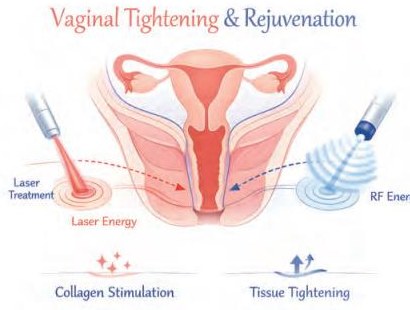
For women with stress urinary incontinence, fractional laser therapy has also been used in selected cases. It is thought to stimulate collagen formation in the vaginal tissues beneath the bladder, improving tissue support around the urethra. However, treatment should always be individualized, and physicians often recommend a combination of approaches, including lifestyle measures, pelvic floor exercises, medications when appropriate, and selected energy-based therapies.
Many women also suffer from severe vaginal dryness, burning, thinning of the vaginal tissues, and painful sexual intercourse (dyspareunia), particularly after menopause. Treatment options may include vaginal laser therapy, platelet-rich plasma (PRP) therapy (sometimes called the O-Shot), hyaluronic acid-based treatments, and local estrogen therapy in appropriate women. These treatments aim to improve tissue quality, restore natural lubrication, and enhance vaginal comfort. The choice of treatment depends on the patient’s symptoms, age, medical history, and clinical evaluation.
Radiofrequency (RF) therapy is another energy-based treatment used for selected women. It delivers controlled heat to the vaginal tissues, stimulating collagen production and tissue remodeling, which may improve vaginal laxity and, in some cases, mild urinary leakage.
Today, many women seek treatment for concerns such as reduced physical sensation during intimacy, feeling “stretched” after childbirth, air escaping from the vagina during exercise, or urine leakage while coughing, laughing, sneezing, or jumping. A range of non-surgical and surgical treatment options is now available, and an individualized treatment plan can often provide significant improvement.
If you experience any of these symptoms, never feel embarrassed to consult a trusted healthcare professional. Gynecologists are experienced in managing these conditions with sensitivity and confidentiality. Early consultation can help identify the underlying cause and provide appropriate treatment, allowing women to regain comfort, confidence, and a better quality of life.
Have a question about this?
Send it to a KIMSHEALTH Obstetrics & Gynaecology specialist. We'll reply by email or phone.