Key takeaways
- Changes that lead to dementia can begin 20 or 30 years before symptoms, so your 40s matter.
- Omega-3s, vitamin B12 and minerals support the brain; ask your doctor about B12 testing after 40.
- Aim for about 150 minutes of moderate aerobic activity a week, plus some resistance training.
- Learn something new, ideally with other people: novelty strengthens the brain.
The brain is the most metabolically active organ in the human body in terms of energy consumption per unit of tissue — a three-pound mass of tissue that never truly powers down, orchestrating every thought, memory, movement, and heartbeat throughout life. Yet, for most of us, brain health remains an afterthought, something we begin worrying about only when memory slips or a diagnosis is made.
In reality, cognitive wellbeing is shaped not by a single moment of crisis but by decades of everyday choices — what we eat, how physically active we are, whether we sleep well, how we manage stress, and how connected we remain to other people. The encouraging news is that many of the same lifestyle habits that protect your heart and metabolic health also protect your brain. Even more reassuring, emerging research suggests that it is never too early — or too late — to begin investing in brain health.
The brain is far from a finished product. It is a living, changing, slightly messy workshop. Well into our 40s, 50s, 60s, and beyond, it retains the remarkable ability to form new neural connections and, in certain regions, even generate new neurons. This capacity, known as neuroplasticity, is one of the most encouraging discoveries in modern brain research.
So, the real question is not whether your brain can still change. It can. The question is whether we are giving it what it needs to do the job.
Why this matters more after 40
Here is the uncomfortable truth. Dementia does not appear overnight. The slow, invisible damage that leads to Alzheimer’s and other forms of dementia often begins 20 or 30 years before the first symptoms become apparent. By the time memory problems become obvious, the underlying changes may have been developing silently for years. That is not meant to scare you. It is meant to give you a window.
Your 40s are not too late. They may be one of the most important decades for protecting long-term brain health. The choices you make today — what you eat, how physically active you are, how you challenge your mind — these are not small things. They are the levers your brain uses to decide whether to keep growing or start fading.
The food your brain is asking for
The brain is an energy hog. It accounts for about 2% of your body weight, but consumes roughly 20% of your body’s energy. So, when its fuel is deficient, the brain feels it first.
Three nutrients stand out in brain health research, and none of them are exotic.
Omega-3 fatty acids
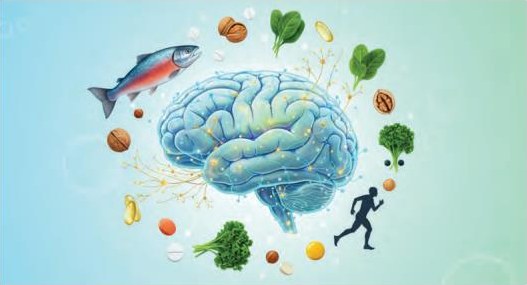
Omega-3 fatty acids — especially the kind found in oily fish such as salmon, sardines, and mackerel — are the building blocks of brain cell membranes. They keep those membranes flexible, which is how neurons talk to each other. People who regularly consume fish may have a lower risk of cognitive decline as they age. If you do not eat fish, a decent omega-3 supplement is a reasonable alternative, although obtaining nutrients from food remains the preferred approach.
Vitamin B12
This is the one I would nag you about. As we age, our ability to absorb vitamin B12 may decline because of changes in the stomach or the long-term use of medications such as metformin or antacids. A vitamin B12 deficiency can cause memory problems, difficulty concentrating, fatigue, tingling or numbness, and other neurological symptoms that may resemble early cognitive impairment.
If you’re over 40, it is worth discussing B12 testing with your doctor. A simple blood test can identify a deficiency that is often readily treatable.
Minerals
Magnesium, zinc, and selenium may not receive the same attention as omega-3 fatty acids, but they also play important roles in brain health. Magnesium contributes to sleep and stress regulation. Zinc supports immunity and communication between brain cells. Iron is essential, but too much iron can be as harmful as too little, so never supplement it blindly.

Without the right inputs, brain cells quietly drift away. The good news: most of it is reversible.
The pattern is simple: a diet rich in fish, leafy greens, nuts, beans, and whole grains is far more beneficial than a handful of supplements. Supplements can help correct deficiencies; they do not replace a healthy, balanced diet.
Move your body, and your brain moves with it
If there were a pill that did what exercise does for the brain, it would outsell most drugs on the market. Physical activity increases the production of brain-derived neurotrophic factor (BDNF), which is essentially a fertilizer for new neurons. It is a protein that supports the growth, survival, and communication of brain cells. It also promotes the brain’s ability to adapt and form new neural connections throughout life.
You do not need to become a marathon runner. Most guidelines point to a fairly modest target: around 150 minutes of moderate aerobic activity a week — brisk walking, cycling, swimming, even dancing. Add a couple of sessions of resistance training, even light weights or bodyweight work, and you have covered most of what the brain wants.
The reason it works is that exercise helps the brain in several ways at once. It improves blood flow to the brain. It reduces inflammation. It steadies blood sugar. It improves sleep. And it lowers stress hormones. Each of these supports brain health; together, their effects are even greater.
If there were a pill that did what exercise does for the brain, it would outsell most drugs on the market.
The part nobody wants to hear: Keep learning
This is where many people hesitate. Crosswords are enjoyable, but if you have been doing the same crossword for ten years, it may no longer challenge your brain the same way.
The brain thrives on novelty. Learning something unfamiliar strengthens neural networks and promotes neuroplasticity. Progress often comes from stepping outside your comfort zone and gradually mastering a new skill.
- Learn a new language.
- Pick up a musical instrument.
- Take a class in a subject you have always been curious about.
- Experiment with a cuisine you have never tried before.
The activity matters less than the challenge it provides. Better still, do it with other people — a class, a club, a group — and you get a bonus: social connection, which is itself a powerful factor encouraging brain health.
The honest summary
No combination of fish, walks, and language lessons can guarantee that you will never develop dementia. Genetics and age still play important roles. But a large share of dementia risk is shaped by the things you control — what you eat, how active you are, how you challenge your mind, how you sleep, how you manage stress and blood pressure, and how you nurture social relationships.
The brain is not a finished product. It is under construction, even now. The question is whether we are giving it the materials it needs to keep building well.
Have a question about this?
Send it to a KIMSHEALTH Neurology specialist. We'll reply by email or phone.