Key takeaways
- Hospital marketing has moved from visibility to trust, experience and measurable outcomes.
- Patients now search, compare and read reviews before choosing where to be treated.
- Referral relationships, corporate wellness and medical value travel have become key areas of growth.
- A strong healthcare brand rests on clinical excellence, patient experience, outcomes and reputation.
Healthcare marketing has undergone a remarkable transformation over the past two decades. What was once limited to creating awareness has evolved into a strategic, highly data-driven function that shapes brand reputation, patient trust, and business growth.
In the early days, hospital marketing revolved around newspaper advertisements, television and radio commercials, roadside hoardings, brochures, free medical camps, and health awareness programs. The focus was to let people know about the hospital, its infrastructure, its doctors, and the services available. Success was measured largely by visibility rather than outcomes.
As private healthcare expanded and competition intensified, hospitals realized that clinical excellence alone was no longer enough. Patients were looking for trust, credibility, comfort and confidence. This marked the beginning of healthcare branding, where hospitals focused on building a distinct identity through consistent communication, community engagement, and patient-centric initiatives.
“Successful healthcare marketing is about building relationships, earning trust, and creating experiences that patients continue to remember.”
Technology further transformed the way hospitals positioned themselves. The introduction of robotic surgery, advanced imaging, transplant programs, and AI-enabled diagnostics allowed hospitals to highlight their expertise and clinical capabilities rather than just their infrastructure and star names. Innovation became a key differentiator. More recently, the digital revolution has reshaped healthcare marketing more profoundly than any previous development. Digital platforms provide marketers with unprecedented insights into user preferences, patterns, and interests to plan targeted campaigns. Furthermore, patients no longer rely only on advertisements or recommendations. They search online, compare hospitals, read reviews, and make informed choices about their care.
As a result, hospital marketing has become deeply integrated with digital technologies. Search engine optimization (SEO), generative engine optimization (GEO), interactive websites, AI-powered chatbots, online reputation management, and performance marketing have become essential components of a modern marketing strategy. The outcomes are fully measurable with well-integrated customer relationship management (CRM) systems. Hence, the emphasis has shifted from mass communication to precision targeting, measurable lead generation, and sustained patient engagement.
Conventional referral marketing has also evolved and become more sophisticated. Building lasting relationships with community physicians, specialists, and other healthcare professionals has proved to be one of the most effective ways to earn trust and ensure sustainable growth. Focused group meetings, academic conferences, workshops, live case presentations, and other physician engagement activities have helped hospitals reinforce their reputation for clinical excellence and attract high-value referrals.
The growth of health insurance and organized industries has also made corporate healthcare an important business segment. The shift from individual health insurance to employer-sponsored corporate insurance has created opportunities for hospitals to offer wellness programs, health check-ups, and customized employee healthcare services, fostering long-term partnerships with organizations. Another significant development has been the rise of Medical Value Travel. By actively reaching out to international patients, hospitals have not only created new revenue opportunities but also strengthened their global reputation and enhanced their brand value.
Today, healthcare marketing operates in a far more dynamic environment. Patients are better informed, expectations are higher, and competition is more intense than ever. Branding is no longer about advertising alone; it is about delivering consistent clinical excellence, exceptional patient experiences, and earning lasting trust. Healthcare branding has also evolved from being hospital-centric to doctor-centric, and today, to becoming truly patient- and experience-centric. Homecare services, virtual consultations, doctor home visits, and privilege partner programs have changed the way healthcare services are delivered. Every interaction, from the first inquiry to post-treatment follow-up, shapes how patients perceive a hospital.
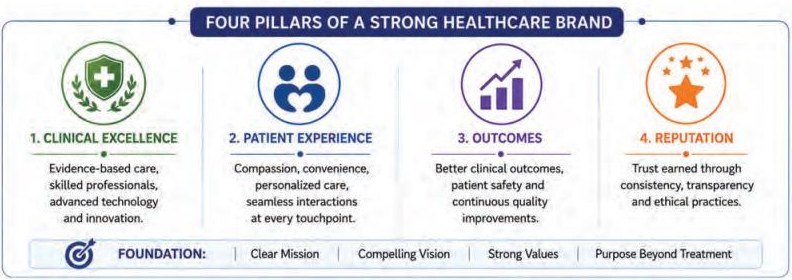
At its core, a strong healthcare brand rests on four pillars: clinical excellence, patient experience, outcomes, and reputation. These are reinforced by a clear mission, a compelling vision, strong organizational values, and a purpose that extends beyond merely providing treatment.
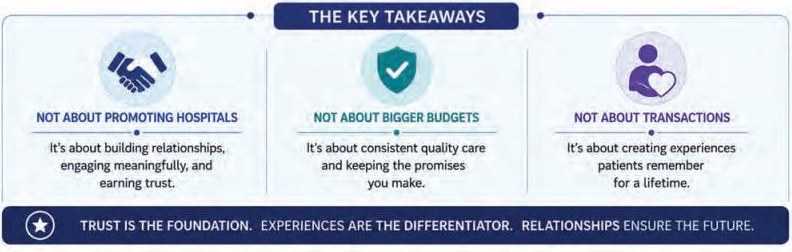
As healthcare embraces artificial intelligence, digital health, and personalized care, marketing will continue to evolve. Yet one principle will remain unchanged: healthcare is built on trust. The hospitals that will lead the future will not necessarily be those with the largest marketing budgets, but those that consistently deliver quality care, meaningful patient experiences, and keep the promises they make.
Looking back over the past two decades, one lesson stands out clearly: successful healthcare marketing is no longer about promoting hospitals. It is about building relationships, earning trust, and creating experiences that patients remember long after they leave the hospital.