Key takeaways
- There is no universal winner: the right choice depends on the diagnosis, not the trend.
- Clear aligners must be worn 20 to 22 hours a day to work.
- Braces suit severe crowding, complex bites, and impacted or rotated teeth.
- Retainers are essential afterwards to stop teeth drifting back.
“A beautiful smile can boost confidence, but a healthy bite improves your quality of life. Modern orthodontics offers more treatment options than ever before, but choosing the right one should be guided by science, not trends.”
Walk into any dental clinic today, and one question comes up more often than any other:
“Should I get braces or clear aligners?”
Social media is filled with celebrities and influencers proudly showing off their nearly invisible aligners, while braces have been the trusted choice for creating beautiful smiles for decades. With so much information available, it is easy to assume that one option is better than the other.
The reality is far simpler: there is no universal winner. The best orthodontic treatment is the one that best suits your individual needs, oral health, and treatment goals.
More than straight teeth
Orthodontic treatment is often associated with improving appearance, but its benefits extend far beyond aesthetics.
Well-aligned teeth are easier to clean, reducing the risk of tooth decay and gum disease. A balanced bite helps distribute chewing forces evenly, minimizing unnecessary wear on teeth and reducing strain on the jaw joints. In many patients, orthodontic treatment also improves speech, chewing efficiency, and long-term dental health.
Perhaps the greatest transformation, however, is confidence. Many people who have spent years hiding their smiles discover that orthodontic treatment changes not only how they look, but also how they feel. Smiling more freely, speaking with more confidence, and feeling at ease in social and professional settings can have a lasting positive impact on overall well-being.
A healthy smile is therefore much more than a cosmetic asset — it is an investment in lifelong oral health and quality of life.
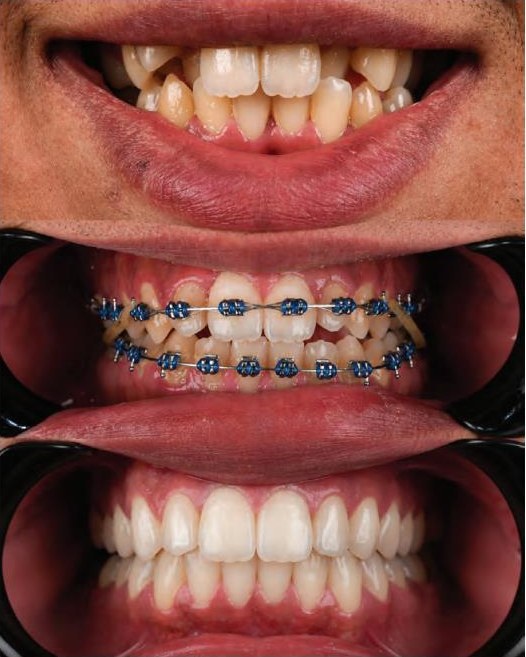
Understanding the two options
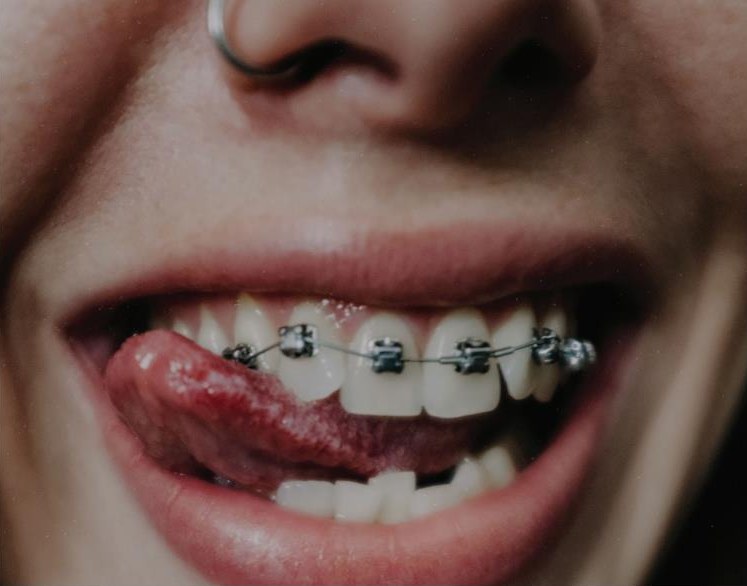
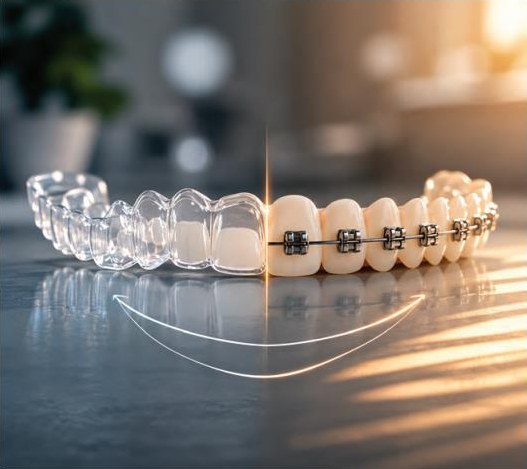
Traditional braces use small brackets attached to the teeth and connected by specialized wires. These wires are adjusted periodically to guide the teeth into their ideal positions. Braces remain fixed throughout treatment, ensuring continuous tooth movement.
Clear aligners, on the other hand, use a series of custom-made transparent trays created using advanced digital technology. Each aligner moves the teeth in small, carefully planned stages before being replaced by the next set.
Although the methods differ, both treatments rely on the same biological principle: applying controlled forces to move teeth safely through the supporting bone. The difference lies not in whether they work, but in how they deliver those forces and in which situations they are most effective.
Why are clear aligners so popular?
Clear aligners have transformed orthodontics, especially for adults and young professionals who seek a discreet treatment option.
Their popularity comes from several advantages:
- Nearly invisible during everyday life
- Removable while eating and drinking
- Easier brushing and flossing compared with fixed braces
- Greater comfort with no brackets or wires rubbing against the cheeks
- Fewer emergency appointments for broken appliances
Another advantage is convenience. Since aligners are removable, patients can continue enjoying most of their favorite foods without worrying about damaging their appliances. This flexibility makes them particularly attractive to professionals, college students, and individuals with busy lifestyles.
However, clear aligners also require a high level of commitment. To achieve the planned results, the patient must wear them for 20–22 hours every day. Their success depends as much on patient commitment as on the treatment plan itself. Even the most advanced aligner system cannot deliver the desired results if it is not worn consistently.
Do braces still have an advantage?
Absolutely.
Braces remain one of the most reliable and versatile orthodontic treatment options available.
They are particularly useful in patients with severe crowding, complex bite discrepancies, impacted teeth, significant tooth rotations, or cases where continuous force is required. Since braces are fixed to the teeth, treatment progresses around the clock without relying on the patient to remember to wear them.
Modern braces are also much smaller and more comfortable than they were in the past. Ceramic, tooth-coloured braces provide a more aesthetic alternative for patients who prefer a less noticeable appearance while retaining the advantages of fixed appliances.
Even today, many complex orthodontic cases are successfully treated using braces, while others may benefit from a combination of braces and aligners. Ultimately, the choice depends on the patient’s orthodontic needs, lifestyle, and treatment goals.
A common myth
One of the most common misconceptions is that clear aligners can correct only minor irregularities.
This may have been true in the early days of aligner therapy. Today, thanks to three-dimensional digital planning, precision attachments, advanced biomechanics, and sophisticated treatment software, clear aligners can treat many moderate and even complex orthodontic problems when carefully planned by an experienced orthodontist.
That said, not every case is suitable for aligners, and not every patient requires braces. The choice depends on the diagnosis, not the trend.
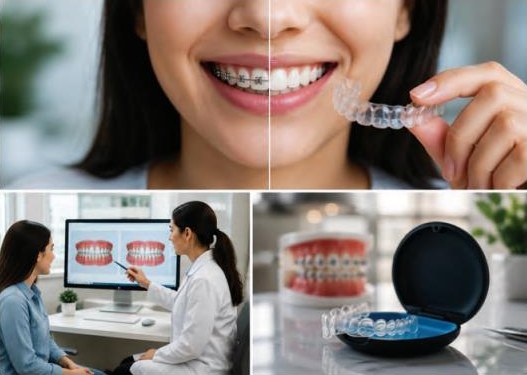
Even the most advanced aligner system cannot deliver the desired results if it is not worn consistently.
Is one treatment faster?
Not necessarily.
Treatment duration depends on the complexity of the case, the patient’s biological response to tooth movement, and how closely treatment instructions are followed. Some patients complete treatment within months, while others require longer to achieve healthy, stable results.
Regular follow-up appointments, good oral hygiene, and careful adherence to the orthodontist’s instructions all contribute to a successful outcome. Consistency matters far more than whether the appliance is a brace or an aligner.
How do you choose the right option?
Every smile is unique.
Before recommending treatment, an orthodontist performs a comprehensive evaluation that includes:
- Tooth alignment and spacing
- Bite relationship
- Jaw growth and facial profile
- Oral hygiene
- Lifestyle and daily routine
- Patient expectations
This comprehensive assessment allows a personalized treatment plan to be developed. The objective is not simply to straighten teeth, but to achieve a healthy, functional bite that remains stable for years to come.
It is also important to remember that treatment does not end when the braces are removed, or the final aligner is worn. Retainers play a crucial role in maintaining the results and preventing teeth from gradually moving back towards their original positions. Long-term success depends not only on effective treatment but also on proper retention.
The final word
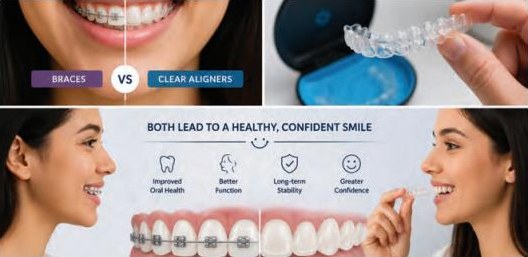
Modern orthodontics is no longer about choosing between “old” and “new” techniques. It is about selecting the right treatment for the right patient.
Whether your treatment involves braces or clear aligners, the goal is the same: a healthy bite, properly functioning teeth, and a confident smile that lasts a lifetime.
So, if you are considering orthodontic treatment, do not ask “Which is better?”
Instead, ask “Which is better for me?”
The answer begins with a comprehensive evaluation, an accurate diagnosis, and expert guidance from your orthodontist — because successful orthodontic treatment is never about choosing the most popular option, but the one that is right for you.
Have a question about this?
Send it to a KIMSHEALTH Dental care specialist. We'll reply by email or phone.